Why does my house still smell like smoke weeks after a fire
Smoke odor that lingers weeks after a fire means residue is still trapped in walls, ducts, and furniture. Here is why it happens and how to remove it for good.
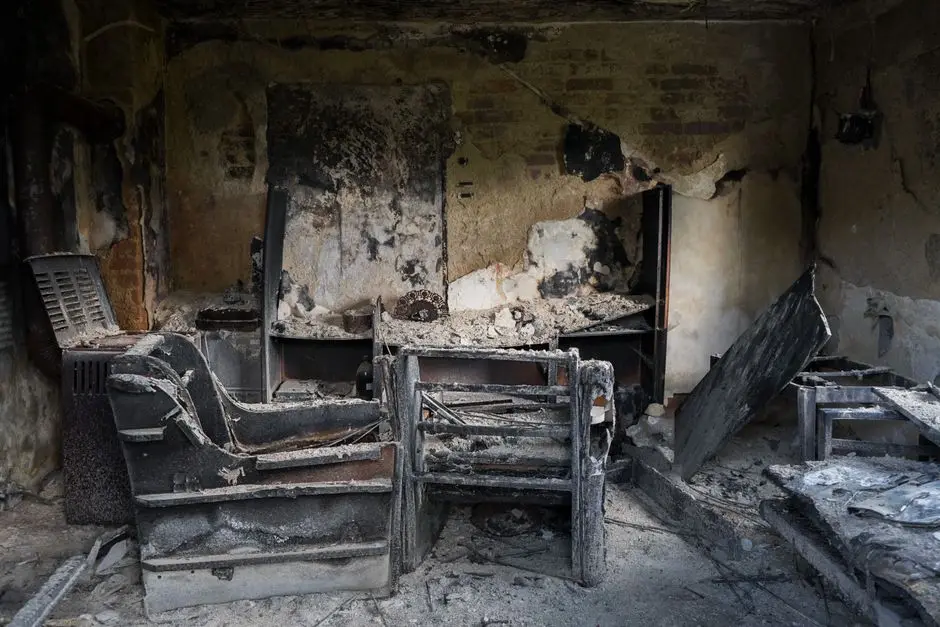
Your house still smells like smoke weeks after a fire because the odor source was never fully removed. Smoke particles soaked into drywall, insulation, ductwork, upholstery, and even the subfloor, and those materials keep releasing that smell every time the temperature rises or the HVAC kicks on. The fire is out. The residue is not. What follows is where that smell hides in an EAST IRVINE home, why wiping down the walls did not fix it, and what actually does.
We run into this constantly. A homeowner calls us three, four, six weeks after a kitchen fire, frustrated because they cleaned every surface twice and the smell is still there. The problem is almost never the surface. It is what is behind it.
Why the smoke smell is still there weeks later
Smoke smell that lingers weeks after a fire is the result of porous materials continuing to off-gas volatile organic compounds trapped inside them. When wood, drywall paper, carpet padding, and fabric get hot, their pores open. Smoke particles - some as small as 0.1 microns - drift in. When the material cools, the pores close around those particles. Now you have a slow-release odor source built into the structure of your home.
That is why the smell seems to come and go. On a cool morning, you barely notice it. By 3 p.m., when the sun hits the west-facing wall and the interior warms up, the smell is back. Heat reopens those pores. Every warm cycle pushes more odor into the air.
There is also a chemical side to this. Burning synthetic materials - foam cushions, vinyl flooring, plastic appliances - leaves behind a residue that is acidic and oily. It bonds to surfaces. Standard soap and water lifts some of it. It does not lift all of it. What is left behind keeps reacting with humidity and heat, and that reaction is what your nose picks up.
Smoke damage restoration is the category of work that addresses this at the source rather than the surface. If you only treat the surface, the smell returns. Every time.
Where lingering smoke odor hides in your EAST IRVINE home
Lingering smoke odor hides in the places you cannot see, and that is true in every home we walk into. The visible soot on the wall above the stove is the easy part. The hard part is everywhere else.
Here is where we find it most often:
- HVAC ductwork. The return air system pulls smoke into every branch of the duct run. It settles on the interior walls of the ducts and stays there. Every time the system runs, it redistributes that smell through the house.
- Attic insulation. Heat rises. Smoke rises with it. Blown-in insulation acts like a sponge. We have pulled insulation out of EAST IRVINE attics that still smelled like a campfire eight weeks after the fire.
- Wall cavities. Smoke travels through electrical outlets, switch plates, and any gap in the drywall. Once it is inside the cavity, wiping the wall does nothing.
- Carpet and padding. Padding is the worst offender. Carpet can sometimes be cleaned. Padding almost never can.
- Upholstered furniture and mattresses. Foam cores hold odor longer than any other household material.
- Cabinet interiors and drawer boxes. Particle board and MDF absorb smoke fast. The inside of a closed cabinet can smell worse than the room it sits in.
We work homes all over the area, and the pattern is the same whether we are doing Fire Damage Restoration in Woodbridge or out near the coast. Two-story homes with the furnace in the attic are the worst. The duct run is long, the attic gets hot, and the smell has more places to settle.
If your home was built before 1990, you also have to think about the wall construction. Older homes in this part of Orange County often have plaster rather than drywall. Plaster is denser, which sounds like a good thing, but it also means smoke that gets into the wall stays there longer and is harder to pull out.
Why smoke odor in walls and HVAC after a fire keeps coming back
Smoke odor in walls and HVAC after a fire keeps coming back because the residue inside those spaces was never removed, only masked. This is the single most common reason a homeowner calls us after a failed DIY cleanup.
Think about what happens when you run the AC. Air gets pulled from every room through the return grille, travels through the duct trunk, passes over the evaporator coil, and gets pushed back out. If the inside of that duct run is coated with smoke residue, you are running your house through a smoke-flavored filter every time the thermostat clicks on.
Walls work the same way but slower. A wall cavity is not sealed. It breathes through outlets, baseboards, and light switch plates. As the cavity warms and cools through the day, it pushes odor into the room. You cannot wipe your way out of that.
We see this most often after kitchen fires and electrical fires, because both produce a wet, oily smoke that penetrates deeper than the dry smoke from a paper fire. If the fire started in a bedroom or a closet, the smoke is usually drier and the cleanup is more straightforward. If it started behind a wall outlet, the residue is inside the wall and the cleanup is a different job entirely.
That is why we treat Electrical Fire Cleanup in EAST IRVINE, California as a wall-cavity and ductwork problem first, surface problem second. Get the hidden residue out, and the smell goes with it.
What actually removes stubborn smoke smell after fire damage
Removing stubborn smoke smell after fire damage takes three things in order: physical removal of the residue, chemical neutralization of what is left, and then odor elimination at the molecular level. Skip any one of those steps and the smell comes back.
Step 1: Physical removal
This is the unglamorous part. HEPA vacuuming of every surface, including the inside of cabinets, the tops of door frames, and the coils on the back of the refrigerator. Then dry chemical sponges on walls and ceilings. Then a proper cleaning solution matched to the type of residue - protein residue from a kitchen fire needs a different cleaner than the dry soot from a wood fire.
Porous materials that cannot be cleaned get removed. Carpet padding, attic insulation, and sometimes drywall. It is not what anyone wants to hear, but leaving contaminated material in place means the smell stays.
Step 2: Ductwork and HVAC cleaning
The duct system has to be cleaned separately. We use negative air pressure and rotary brushes to scrub the interior of the duct run, then seal it. The evaporator coil gets cleaned too. If the coil is coated with residue, every cooling cycle reintroduces the smell.
Step 3: Odor neutralization
This is where hydroxyl generators and ozone treatment come in. Hydroxyl generators are safe to run in occupied spaces and work by producing hydroxyl radicals that break down odor molecules. Ozone treatment is stronger and requires the house to be empty during treatment - typically 4 to 12 hours depending on the size of the home and how deep the contamination goes.
We use ozone on maybe one in three jobs. It is not always necessary, and it is not always the right tool. On a light kitchen fire with good ventilation, hydroxyls are usually enough. On a two-story home with smoke in the attic and the ductwork, ozone is often the only thing that gets the last of it.
For the full sequence, we handle this under Odor Removal After Fire in EAST IRVINE, California, and we do not consider the job done until the smell is gone at the source, not just at the surface.
Common mistakes that make the smell worse
Most of the failed DIY cleanups we see come down to a handful of mistakes. Here are the ones that show up over and over:
- Painting over soot. Paint does not seal odor. It traps it. Within a few weeks, the smell bleeds through the paint and you have to strip it back to fix the problem.
- Running the HVAC without cleaning it first. This spreads residue through the entire duct system and makes the problem worse, not better.
- Using vinegar or bleach as a primary cleaner. Both can help with light surface odor. Neither neutralizes the oily residue that causes the smell to return.
- Air fresheners and candles. These mask the smell for a few hours. They do nothing to the source. In some cases, the added humidity from a candle makes it worse.
- Throwing away soft goods too early. Some upholstery and clothing can be saved with the right treatment. Some cannot. Guessing wrong costs money either way.
- Assuming the smell will fade on its own. It will not. Not if the residue is still in the walls and ducts.
We have walked into homes where the homeowner painted three coats over smoke-stained walls. The paint peeled within a month. The smell was still there. That is a $2,000 mistake that a $400 cleaning would have prevented.
When to call a professional
Call a professional when the smell is still noticeable two weeks after the fire, when you can smell it in rooms that were not directly affected, or when the HVAC system was running during or after the fire. Those three conditions mean the residue is in the structure, not on the surface.
You should also call if anyone in the house has headaches, irritated eyes, or a persistent cough that started after the fire. Those are signs that the air quality is still compromised, and no amount of cleaning the visible surfaces will fix that.
We handle this work every week across the city. If you are searching for Fire Damage Restoration Near Me in EAST IRVINE, California, we will come out, find the actual source of the smell, and tell you what it takes to remove it. No guesswork, no upselling a full rebuild if a targeted cleanup will do the job.
Frequently Asked Questions
Why does my house still smell like smoke weeks after a fire in EAST IRVINE California?
Because smoke particles soaked into porous materials - drywall, insulation, ductwork, upholstery - and those materials are still off-gassing. Surface cleaning does not reach them. The smell returns every time the house warms up or the HVAC runs.
How long does smoke smell last after a fire in EAST IRVINE?
Without professional treatment, smoke smell can last 6 months to 2 years, and in some cases permanently. With proper remediation - physical removal, duct cleaning, and odor neutralization - most homes are odor-free within 3 to 10 days of the work starting.
Can smoke smell come back after cleaning in EAST IRVINE CA?
Yes, if the residue inside wall cavities or ductwork was not removed. Masking the surface smell with paint, air fresheners, or vinegar gives you a few days of relief. The smell returns once the temperature rises and the trapped residue releases again.
Does ozone remove smoke smell from a house in EAST IRVINE?
Ozone removes smoke odor at the molecular level, and it works well on deep contamination. It requires the house to be empty during treatment - usually 4 to 12 hours - and it is one step in a full remediation, not a standalone fix. Hydroxyl generators are used instead when the home is occupied.
Who removes lingering smoke odor in EAST IRVINE California?
Fire Damage Restoration East Irvine handles lingering smoke odor removal, including duct cleaning, wall cavity treatment, and ozone or hydroxyl neutralization. We serve all EAST IRVINE neighborhoods and can usually assess a home within 24 hours of your call.
Get help with Fire Damage Restoration in EAST IRVINE
If your house still smells like smoke weeks after a fire, the residue is still in the structure and it will not go away on its own. We find it, remove it, and confirm the air is clean before we leave. Call Fire Damage Restoration East Irvine at (833) 929-6186 and we will get a technician out to your home.